

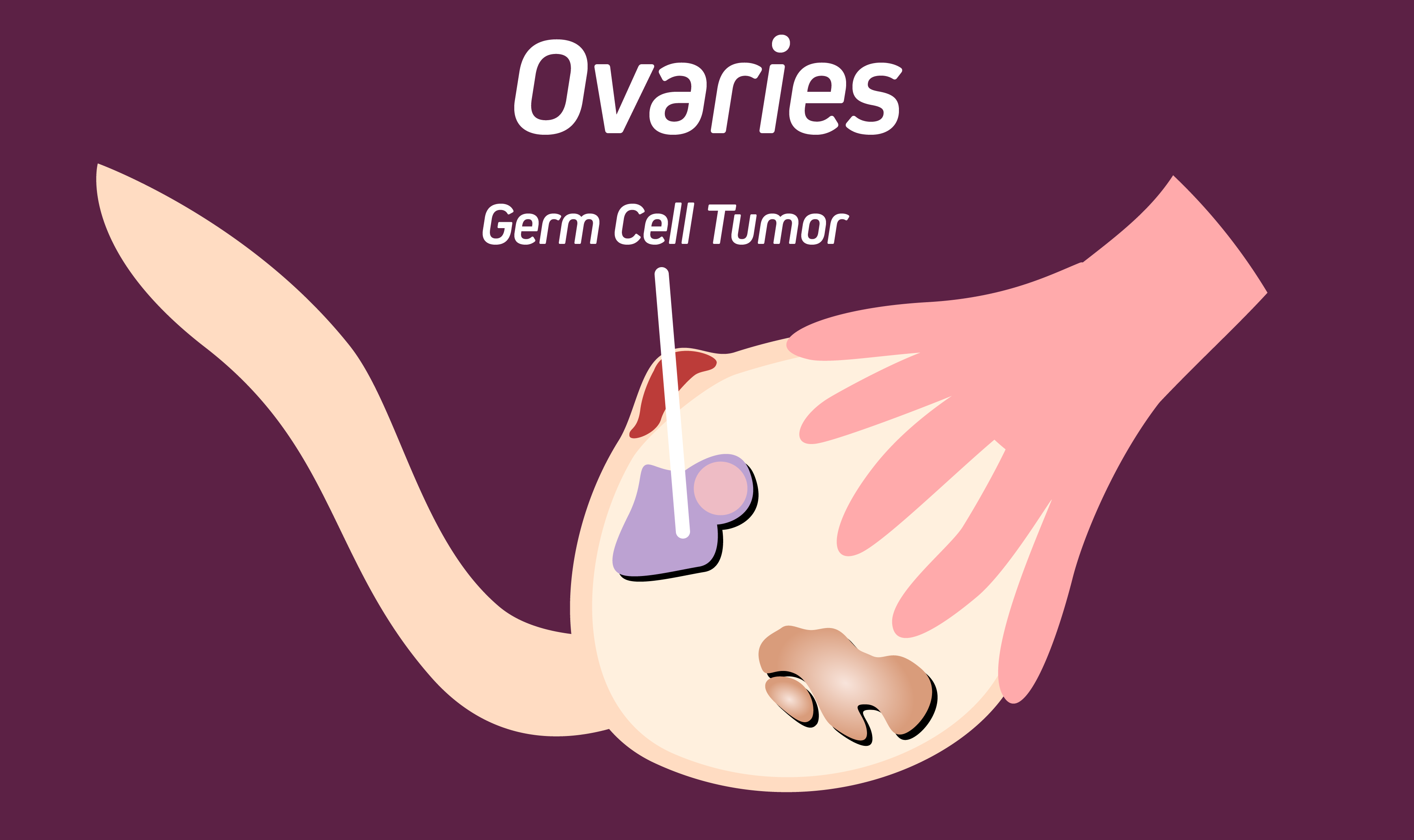

Ovarian germ cell tumors
Ovarian germ cell tumors come from the germ cells in the ovaries, which produce eggs.
Most germ cell tumors are not cancer, but some are. They occur most often in teenagers and women in their 20s. This rare type of tumor grows fast and can be mistaken for pregnancy. Sometimes, these tumors burst, creating abdominal pain and bleeding.
Types of germ cell tumors
Benign germ cell tumors
Most germ cell ovarian tumors are benign. Usually, the only treatment needed is an operation to remove the tumor. Once the tumor has been removed, it will not grow back.
Cancerous germ cell tumors
Malignant (cancer) germ cell tumors are made up of cancer cells. Treatment is surgery to remove the tumor and chemotherapy (medicine in your veins) to kill cancer cells.
Risk factors for ovarian germ cell tumors
- family history of ovarian cancer, especially in mother, sister, or daughter
- age 50 or older
- menstrual history—first period before age 12, no or late childbirth after 30, late menopause
- personal history of breast cancer or endometrial cancer
- gene mutations, including BRCA1, BRCA2
Symptoms
Check with your doctor if you have any of the following:
- swollen abdomen without gaining weight in other parts of the body
- irregular periods
- abnormal vaginal bleeding
- bleeding from the vagina after menopause
- pain or a feeling of pressure
- pregnancy like symptoms
- constipation
- a high temperature (fever)
- chills
- nausea or trouble eating
The outlook for those with benign ovarian germ cell tumors is very good. The outlook for malignant germ cell tumors varies depending on how far cancer has spread.
